
See how VMP sequencing ties IQ/OQ/PQ to PPQ/CPV, and why traceable calibration evidence defends audits. Insights from PCS Precision.

Qualification proves your equipment and systems are fit for their intended use; validation proves the process or method built on that equipment consistently delivers the required outcome. Qualification always comes first because you cannot validate a process running on equipment you haven’t proven works. Get that sequence wrong and every downstream compliance document is built on sand.
TL;DR:
- Qualification must be fully completed and properly documented before validation activities, especially process qualification, can begin.
- Validation extends beyond qualification, requiring statistical evidence that processes consistently produce products meeting quality criteria, with ongoing monitoring after initial qualification.
- Traceable calibration certificates and measurement uncertainty statements are critical for qualifying equipment and supporting validated results, preventing auditor challenges.
- A comprehensive validation master plan should explicitly define the sequence and responsibility for qualification and validation milestones, linking evidence traceability across all documentation.
- Most compliance issues stem from organizational failures in sequencing and traceability, not misunderstandings of qualification or validation definitions.
Qualification is the documented evidence that a specific piece of equipment, utility, facility, or supporting system was designed, installed, and operates the way you specified. It’s system-focused. You’re not yet asking whether a process running on that system will consistently produce the right result. You’re asking whether the system itself does what it’s meant to do, under the conditions it’s meant to do it in.
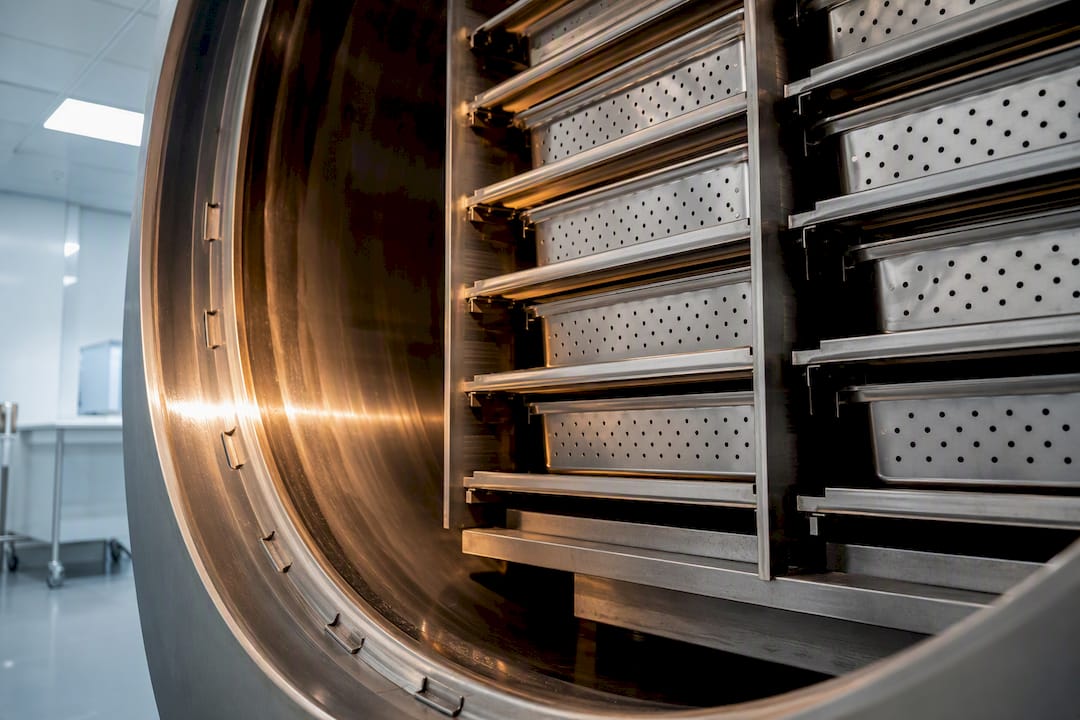
The scope covers a wide net: production equipment, HVAC and water systems, cleanrooms, autoclaves, weighing instruments, and any supporting infrastructure a GMP process depends on. For a new autoclave, that means confirming the door seals correctly, the chamber reaches set-point temperature, and the control system logs data accurately, well before you ever load a batch of product into it.
Qualification typically runs through four recognised stages, though not every project needs all four:
An ASQ explainer on qualification and validation frames qualification simply: it demonstrates the ability to fulfil specified requirements. That’s a useful test to apply whenever you’re unsure whether an activity belongs under qualification or validation. If the question is “does this piece of kit do what the spec says,” you’re qualifying. If the question is “does the process running on it deliver the outcome patients or customers need,” you’re validating.
The deliverables from a qualification exercise form the evidence trail auditors will ask for first. Expect to produce:
That last point matters more than most teams treat it. If a weighing instrument used during OQ testing hasn’t been calibrated against traceable standards, the qualification result itself is unverifiable, regardless of how clean the paperwork looks.
Validation is the documented evidence that a process, method, or system consistently produces a result that meets predetermined specifications. Where qualification asks “does the equipment work,” validation asks “does the process, running on qualified equipment, reliably deliver the product quality attributes it’s supposed to.” It’s a bigger, more scientific question, and it needs statistical rigour that qualification doesn’t.
Validation isn’t one activity. It splits into several distinct disciplines depending on what you’re proving:
Process validation itself runs on a three-stage lifecycle model that the FDA’s process validation guidance established as the modern standard. Stage one is process design, where you build process understanding from development and scale-up data. Stage two is process performance qualification (PPQ), where you execute full-scale batches against pre-set acceptance criteria to prove the process works commercially. Stage three is continued process verification (CPV), an ongoing programme that monitors and trends process data across the product’s commercial life, catching drift before it becomes a deviation.
That third stage is the one most teams underinvest in. Validation isn’t a certificate you earn once and file away. It’s a live commitment to keep proving the process still works, batch after batch, year after year.
The paperwork validation generates differs in character from qualification paperwork:
The practical differences show up across four axes: what’s being proven, when the activity happens, what evidence it produces, and what documentation an auditor expects to see. Confusing these axes is where most GMP teams lose points during inspection.
Scope is the clearest divide. Qualification proves a system, piece of equipment, or facility performs to specification. Validation proves a process, method, or workflow running on that qualified system consistently delivers the intended outcome. A tablet press gets qualified. The tablet compression process running on that press gets validated. A UV-Vis spectrophotometer gets qualified against manufacturer specifications. The assay method run on that spectrophotometer gets validated against ICH Q2 criteria.
| Axis | Qualification | Validation |
|---|---|---|
| Object of proof | Equipment, system, facility, utility | Process, method, cleaning procedure, computerised workflow |
| Typical trigger | New equipment install, major modification, relocation | New or changed process, new product, method transfer |
| Core evidence | IQ, OQ, PQ protocols and reports | VMP, validation protocol, PPQ report, CPV data |
| Statistical rigour | Pass/fail against fixed specifications | Statistically justified sampling and acceptance limits |
| Regulatory anchor | EU GMP Annex 15, equipment-specific standards | FDA process validation guidance, ICH Q2(R2) |
Timing follows a strict logical order, and EU GMP Annex 15 is explicit about it: qualification is the technical foundation validation is built on. You cannot run meaningful PPQ batches on equipment that hasn’t completed OQ, because you’d have no way to distinguish an equipment fault from a process fault when a batch fails. Inspectors treat that sequencing gap as a serious finding, not a paperwork oversight.
Outputs differ in what they’re claiming. A qualified state is a claim about capability: this equipment can operate within its specified range. A validated state is a claim about consistency: this process does deliver the required result, reliably, across the variation you’d expect in normal commercial operation. That’s a meaningfully higher bar, because it has to account for raw material variability, operator variability, and environmental variability that a qualification protocol never tests for.
Documentation contrasts follow from that distinction. IQ/OQ/PQ reports document discrete test executions against fixed acceptance criteria, usually pass or fail. Validation and PPQ reports document statistical performance against critical process parameters and critical quality attributes, usually with control charts, trending, and a rationale for the sampling plan chosen. A VMP sits above both, declaring how qualification evidence feeds into validation strategy across an entire site.
The Validation Master Plan is the document that stops qualification and validation activity from running as two disconnected programmes. Done properly, the VMP names every system requiring qualification, states which validation activities depend on that qualified state, and assigns clear ownership for both.
A VMP worth defending at audit declares three things without ambiguity:
That third point saves real rework. Best practice is to annex the relevant IQ/OQ/PQ test reports directly into the PPQ protocol and build a traceability matrix that maps the user requirement specification through to IQ/OQ test results, through to PQ outcomes, through to the critical process parameters used in PPQ. One matrix, one line of sight, no gaps for an inspector to probe.
Fragmented evidence is the single most common inspection red flag in this space. It shows up as PPQ batches referencing equipment that was never formally re-qualified after a modification, or a validation protocol citing “prior qualification” with no document number attached. Both are avoidable with a VMP that treats sequencing as a control point, not a formality.
Pro Tip: Before you draft a single validation protocol, pull the equipment’s qualification file and confirm every acceptance criterion it relied on is still current. A PQ that’s three years old and never revisited after a calibration interval change is a gap waiting to be found by an auditor, not by you.
Protocols and reports live or die on completeness. A well-built one anticipates the auditor’s question before it’s asked; a thin one invites a deviation investigation months later when nobody remembers the context.
For IQ/OQ/PQ protocols, the sections that matter most are:
For validation protocols, the bar is higher because the statistical justification carries the argument:
Metadata is where a surprising number of otherwise strong protocols fall down. Every measurement used to justify an acceptance criterion needs traceable calibration behind it, and that traceability has to be visible in the record itself, not filed separately where an auditor has to go hunting for it.
The most efficient fix is to record the calibration certificate number, calibration date, and measurement uncertainty statement directly alongside the test result it supports, a practice covered in more detail in PCS Precision’s overview of digital calibration certificates. Personnel training records and change-control references belong in the same bundle. If a test was run by someone whose training record has lapsed, or on equipment mid-way through an open change control, that’s a data integrity question, not a minor administrative gap.
Three short examples make the distinction concrete, because the theory only lands once you’ve mapped it to a real activity.
Analytical method example. During early development, a lab might run a method qualification, a lighter check that the method performs adequately for its immediate purpose, such as confirming linearity across a narrow range for an in-process check. Full method validation is a different order of rigour entirely, governed by ICH Q2(R2), and required before a method is used for release testing or stability studies. That means demonstrating accuracy, precision, specificity, linearity, and robustness across the method’s full intended range, with pre-defined acceptance limits for each parameter.
Autoclave or filling line example. IQ confirms the autoclave was installed per the manufacturer’s specification and connected to validated utilities. OQ challenges the cycle across its full temperature and pressure range, checking the control system responds correctly to deliberate fault conditions. PQ then runs multiple sterilisation cycles under simulated production load, generating the performance data that PPQ later references when validating the sterilisation process for a specific product.
Computerised systems example. Infrastructure qualification confirms a server, network, or platform meets its technical specification: uptime, backup integrity, access controls. That’s distinct from validating the GMP-critical functions running on that infrastructure, such as a batch record system’s audit trail or an electronic signature workflow. FDA’s guidance on computer software assurance draws this line explicitly, and separating the two in your VMP reduces the audit friction that comes from treating a validated function as though qualifying the server underneath it was enough.
Every acceptance criterion in an OQ, PQ, or PPQ protocol ultimately rests on a measurement, whether that’s a weight, a temperature, a flow rate, or a pressure reading. If the instrument that generated that measurement isn’t itself traceable to a national or international standard, the result it produced is a number without a defensible basis behind it.
A calibration certificate that lacks a stated measurement uncertainty, or references a standard that isn’t traceable, gives an auditor grounds to question every downstream result the instrument contributed to, including PQ and PPQ data collected months earlier.
The link between calibration and defensible qualification evidence draws on extensive industry experience across manufacturing, food, pharmaceutical, and aerospace sites. NATA-accredited calibration work underpins the acceptance criteria used in IQ/OQ/PQ testing, because measurement instruments that haven’t been calibrated against a traceable standard cannot support a defensible test result, no matter how carefully the protocol was written.
Precision is the backbone of any qualification or validation exercise, and it starts well before the protocol is executed.
Pro Tip: When scoping a new qualification project, bring your calibration provider in during protocol drafting, not after testing has started. Acceptance criteria written without knowing the instrument’s actual uncertainty budget often need revising once real data comes in, and that’s expensive rework to discover late.
If you’re specifying weighing equipment for a PQ or PPQ campaign, look at options like the i-TME weighing modules for integration flexibility with a documented uncertainty profile from the outset.
Start with the VMP. If it doesn’t explicitly declare which qualification milestones must close before each validation protocol executes, that’s the first gap to close, before drafting a single new protocol. Next, audit your existing IQ/OQ/PQ files for completeness, particularly for older equipment that’s been through modifications without a formal re-qualification. Missing or fragmented evidence there undermines every validation activity built on top of it.
Collect and verify calibration evidence for every instrument feeding acceptance criteria, and confirm every certificate carries a traceable uncertainty statement. Then plan PPQ and CPV activity with realistic timelines. For a small equipment change, engineering, QA, and validation can usually run qualification and validation sequentially within weeks. For a large capital project, expect these to run as parallel workstreams with a shared traceability matrix, not a single linear queue.
Set your change-control triggers now, not after the next deviation. Equipment modification, relocation, a calibration interval change, or a supplier change to a critical raw material should each trigger a documented requalification or revalidation review, on a periodic cadence you can defend at inspection.
Primary regulatory documents remain the most reliable reference when your own procedures need defending at audit, and each governs a distinct part of the qualification and validation landscape.
The conventional advice on qualification versus validation stops at definitions: qualification is equipment, validation is process, memorise the difference and move on. That advice isn’t wrong, but it skips the part that actually causes inspection findings, which is sequencing discipline inside the VMP.
What the evidence here supports is a sharper judgement: most compliance gaps aren’t definitional confusion, they’re organisational. Teams know what qualification and validation mean; they just don’t enforce the dependency between them consistently across every project, especially smaller change-control jobs that skip a formal VMP review.
If you take one thing from this away, prioritise the traceability matrix over the glossary. Map URS to IQ/OQ to PQ to PPQ explicitly, and make measurement traceability, not just paperwork traceability, part of that chain. Calibration data that can’t be verified independently is a weak link most teams don’t notice until an auditor pulls on it. Fix the chain, not just the definitions.
— Nima
