
An Australia focused explainer on NATA accreditation covering the official process, international recognition, a practical checklist and a 99.9%...

NATA accreditation is Australia’s independent verification that a laboratory, calibration provider or inspection body has the technical competence to produce results you can trust. It matters because regulators, customers and trading partners rely on that verification instead of taking a provider’s word for it. Accreditation also opens the door to international acceptance through mutual recognition arrangements, so accredited results from Australian providers carry weight overseas too.
TL;DR:
- NATA accreditation covers a wide range of technical activities including testing, calibration, inspection, reference material production, and proficiency testing programs.
- The accreditation process involves a readiness assessment, on-site evaluation, corrective actions, and ongoing periodic reassessments, requiring several weeks to months of planning.
- Accreditation is based on adherence to international standards like ISO/IEC 17025 and ISO 15189, with scopes specifying exact methods, tests, and locations covered.
- Results from NATA-accredited providers are generally accepted internationally through mutual recognition arrangements, saving time and costs for exporters.
- Before relying on an accredited provider, confirm the specific scope covers your needed tests, traceability to the national measurement system, and review sample certificates for compliance with your regulator’s requirements.
NATA accredits a wider range of technical activities than most people realise. Beyond laboratory testing, its scope covers calibration, inspection, reference material production and proficiency testing programs that let laboratories check their own performance against peers.
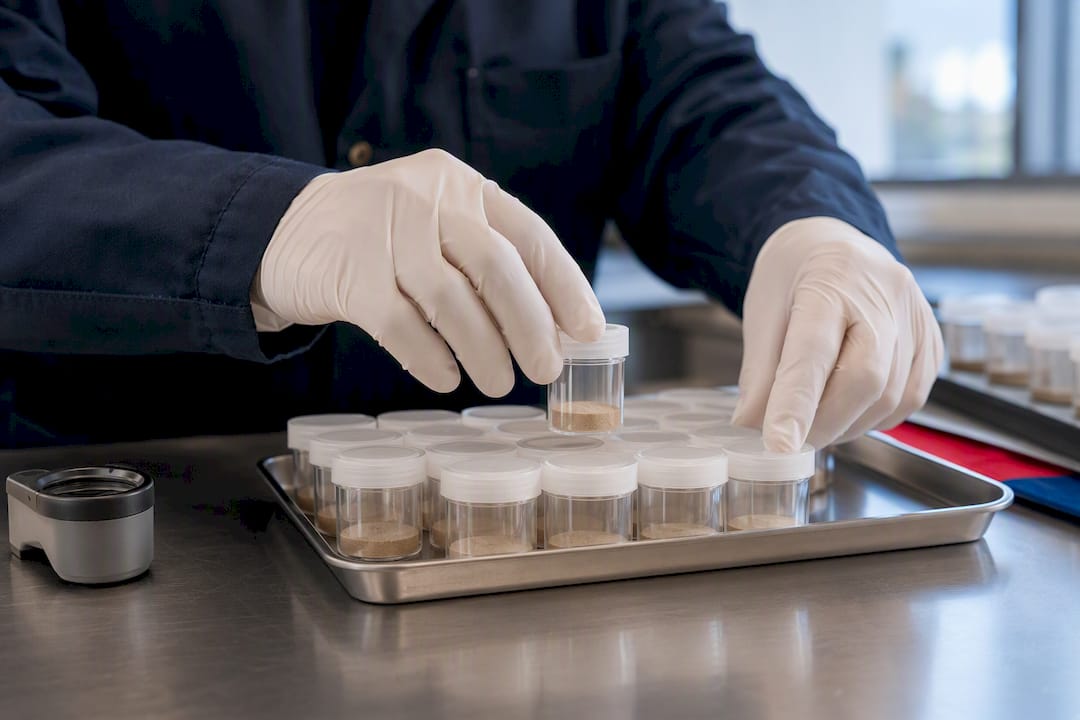
Organisations across manufacturing, food and pharmaceutical production, environmental monitoring, forensic science and medical imaging all rely on NATA accreditation to demonstrate their results stand up to scrutiny. A food manufacturer testing for contaminants, a hospital pathology lab, and a mining company checking ore samples might look like unrelated businesses, but each needs the same underlying assurance that its measurements are technically sound.
The National Association of Testing Authorities, Australia is formally recognised by government as the country’s national accreditation body, sitting alongside Standards Australia and the National Measurement Institute within the broader standards and conformance system. Standards Australia sets the technical standards; the National Measurement Institute maintains traceability to national measurement references; NATA verifies that individual organisations actually meet the relevant requirements in practice. Government agencies routinely point to accredited providers when regulated or safety critical testing is involved, because accredited results are comparable and legally defensible in a way unverified results are not.
Getting accredited is a structured process, not a one-off inspection. Here’s how it runs in practice, from readiness through to ongoing maintenance:
Pro Tip: Book your advisory visit and initial assessment well ahead of any tender deadline. Scheduling can take weeks to months depending on assessor availability and how complex your scope is, and a late booking can cost you a contract you’d otherwise win.
Every accreditation decision is measured against a defined technical baseline, not a general impression of competence. NATA’s assessment criteria map directly to internationally recognised standards, so an accredited organisation’s capability is described in specific, checkable terms.
That specificity matters when you’re checking a provider. A quick glance at a certificate isn’t enough. You need to confirm the exact test or calibration you’re relying on actually sits inside the accredited scope.
NATA is a signatory to the International Laboratory Accreditation Cooperation’s mutual recognition arrangements, alongside the Asia Pacific Accreditation Cooperation. In practice, that means results from a NATA-accredited laboratory or calibration provider are generally accepted by accreditation bodies in other MRA signatory countries without needing retesting overseas.
For exporters, this can save real time and money. Product testing done here doesn’t automatically need to be repeated once goods land in an importing country, provided that country’s own regulator accepts MRA-based results for the relevant product category.
The caveat matters, though. Mutual recognition covers technical competence, not local law. You may still need separate product registration, regulatory approval or country-specific certification on top of NATA-accredited test results, particularly for pharmaceuticals, medical devices or anything covered by its own licensing regime.
Accreditation shifts risk off your business and onto a verified, independently assessed process. That’s the real commercial value: when a regulator or customer questions your supply chain, you can point to a NATA-accredited provider’s certificate instead of arguing your own case from scratch. Independent research frames this as ensuring “like can be compared to like”, which matters enormously in tender evaluations where multiple suppliers’ results need to sit on the same footing.
Before you sign with any provider, a short checklist earns its keep:
Pro Tip: Request a sample calibration certificate before committing to a provider. It shows you exactly how measurement uncertainty and traceability are reported, before you’re relying on it under time pressure.
PCS Precision’s own work with a hospital pathology laboratory, where precision weighing systems reached 99.9% accuracy, is a useful illustration of what accredited-level performance looks like in a setting where the margin for error is genuinely thin.
Too many businesses still treat NATA accreditation as paperwork to survive an audit. That undersells it. UTS research estimates that the accreditation system contributes several hundred million dollars annually to the Australian economy, and the social value, public trust, regulatory confidence and safer outcomes are arguably harder to price but just as real. Treat accreditation as infrastructure for your business relationships, not a compliance line item, and the calculation changes. If you’re weighing up whether to pursue it or which provider to trust, that’s a conversation worth having properly.
— Nima
PCS Precision offers NATA-accredited calibration services that support businesses handling various equipment brands. We provide calibration and servicing of various measurement instruments for clients across manufacturing, laboratory, food, pharmaceutical and aerospace sectors, with traceability included in certificates.
If you’re weighing up a new instrument purchase alongside your calibration needs, our i-TME weighing modules and A&D SC Series scales are worth a look, and our team can talk through digital calibration certificates and how they simplify your compliance records over time. Get in touch through PCS Precision to request a quote or talk through the scope of work you need covered, before your next audit or tender deadline is bearing down on you.
For the official process, see NATA’s own accreditation guide and the benefits of accreditation pages. The economic evidence sits in the UTS report on NATA’s value, and government context is available via Industry.gov.au. For international recognition, ILAC covers the mutual recognition framework directly.
